Sample Submission Forms
USER CHARGES FOR SERVICES OFFERED BY ATPC
Electron Microscopy
The Electron Microscopy Facility houses Cryo-Electron Microscope: JEM2200FS; Transmission Electron Microscope: JEM1400 FLASH; and VolumeScope SEM with serial block-face imaging solution. The facility provides services in the field of life sciences and material sciences giving intricate details of specimen morphology, structure and composition.
1. Transmission Electron Microscope: JEM-1400Flash
Transmission electron microscope (TEM) is used in a wide range of fields, such as biology and material sciences to provide morphological and compositional information of samples. JEM1400 Flash is 120 kV TEM equipped with tungsten filament as electron source and highly-sensitive sCMOS camera. It can achieve high contrast imaging of biological specimens (including macro-molecular materials, tissue sections and viruses etc.) and material science samples (polymeric and metallic nanoparticles etc.) from low magnification (min. mag. 10X) to high magnification (max. mag. 1.2 MX) with resolution up to 0.38 nm.

2. Cryo Electron Microscope: JEM-2200FS
The JEM-2200FS is a field emission electron microscope which can be employed for biological and material science samples. It is equipped with a 200 kV field emission gun (FEG), piezo-controlled goniometer, holders for cryo-observation and tomography, in-column energy filter (Omega filter), and Gatan camera (K2 summit direct detection camera). This instrument is utilized for high-resolution cryo-electron microscopy, zero-loss imaging, energy-filtered imaging, spectroscopy for elemental analysis and tomography.

3. Scanning Electron Microscope: Apreo VolumeScope FEI
VolumeScope is a novel serial block-face imaging solution that enables excellent z-resolution from multi-nnergy deconvolution SEM combined with the efficiency of high-resolution cryo-electron microscopy in situ sectioning. The system offers highest contrast and optimal SNR with in-lens and in-column detectors for HiVac, as well as dedicated detectors for optimal resolution in LoVac. The VolumeScope SEM unravels the complex 3D architecture of cells and tissues in their natural context which is crucial for gaining understanding of the structure-function correlation in biological systems.
System Specifications:
- High-Resolution Field Emission-SEM with High Stability Schottky Field Emission Gun
- Resolution: 1.0 nm @ 15 KV; 1.4nm @ 1KV
- Beam Current: 1 pA to 400 nA
- Accelerating Voltage Range: 200V- 30Kv
- Stage: Eucentric goniometer stage, 5-axes motorized
- Rotation: n x 360°
- Tilt: -15° / + 90°
- Chamber: 340 mm; Analytical WD: 10 mm
- Detectors: T1 (Segmented in-lens detector), T2 (In-lens detector) and ETD (Everhardt-Thornely Detector), LVD (Lo-Vac Detector), VS-DBS (Directional Backsterred detector)
- Vaccum System: High Vaccum Mode (<6.3x 10⁻⁶ mbar) and Low-Vaccum Mode (up to 50 Pa-500 Pa) for charge compensation of non-conductive (biological samples)

Flow Cytometry
Flow Cytometry Facility provides a wide range of services in the field of cell biology and immunology. The facility houses one cell sorter and 3 Flow Cytometry Analyzers with wide range of applications in clinical and basic sciences.
1. Cell Sorter: BD InfluxTM
The cell sorter helps to separate target particles (e.g. cells, chromosomes or organisms) from a mixed population, based on the differences in morphology and surface topology/markers. BD InfluxTM is a high-speed system that provides laser-assisted rapid detection and sorting of target particles based on multi-parametric analysis. This system features a unique acoustical coupling in the nozzle assembly to reliably create droplets for sorting, while ensuring low shear stress to optimize cell viability, even at high pressures. To support aseptic sorting, the fluidics path is easily removed and replaced with the optional disposable fluidics kit. In principle, the system focusses laser on the fast-moving, stream of target fluorescent particles and photomultiplier tubes (PMTs) detect the emitted fluorescence and light scatter. The desired particles matching pre-defined criteria get charged and sorted while the uncharged particles are passed down into the waste collector. This system is configured with 5 lasers (488, 405, 561, 355, 640) that support 16 simultaneous parameters and 16 x 16 compensation. The BD InfluxTM system features 2, 4 and 6-way sorting, as well as plate sorting. The BD InfluxTM electronics support high-speed sorting and BD FACSTM Accudrop technology helps simplify sort optimization. With a wide range of applications including viability/vitality testing, ligand binding, cell hybridization, process development and/or protein engineering, this system is an important tool in biotechnological research.

2. Flow Cytometry Analyzers
Flow cytometry analyzers can be used to analyze physical and/or chemical characteristics of target particles in a thin stream of fluid which is made to pass through laser light. The desired target components like cell surface markers are fluorescently labelled and excited by laser, resulting in varied light emission that is detected by PMTs. The facility is designed for cell counting, sorting, biomarker detection, protein engineering, multiparametric analysis of the physical and chemical characteristics of cells. The facility is routinely used for various applications in clinical and basic sciences.
The Flow Cytometry Facility houses–
2.1. Accuri C6 (Beckton Dickinson): 2-lasers and 4-colours analyzer

2.2. FACSVerse (Beckton Dickinson): 3-lasers and 8-colours analyzer

2.3. Gallios (Beckman Coulter): 3-lasers and 10-colours analyzer

Genomics
Genomics Facility currently houses two instruments i.e. DNA Sequencer: ABI 3500 Genetic Analyzer and Droplet Digital PCR (Bio-Rad).
1. DNA Sequencer: ABI 3500 Genetic Analyzer
3500 Genetic Analyzer is a fluorescence based 8-capillary sequencing instrument which is based on Sanger DNA sequencing. The system is configured with 50 cm array and an integrated software for instrument control, data collection, quality control, base-calling and size-calling of samples. We use BigDyeTM Terminator v3.1 cycle sequencing kit, POP-7TM, and BigDye XterminatorTM for short-to-long-read sequencing. The system has a varied range of applications like microbial sequencing, targeted DNA sequencing, epigenetic analysis, pathogen analysis, genetic disease research, SNP analysis and biomarker analysis. Currently, a range of cloned DNA, PCR products and BAC DNA are analyzed with a read length of up to 1000 bp.

2. Droplet Digital PCR: ddPCRTM (Bio-Rad)
ddPCRTM is an advanced version of PCR that provides simultaneous clonal amplification and fluorescence-based quantification of nucleic acids. A typical reaction in ddPCRTM is partitioned into several thousands of water-in-oil droplets where individual reactions are carried out providing absolute, precise and reliable quantification. The system includes: i) QX 200TM Droplet Generator; ii) T100TM Thermal Cycler; iii) PX1TM PCR Plate Sealer and iv) QX 200TM Droplet Reader. The reaction utilizes nucleic acids, primer sets, fluorescent probes (TaqMan probes with FAM and HEX or VIC), and proprietary supermix for droplet generation. The QX 200TM Droplet Generator generates approximately 20,000 nanoliter-sized uniform droplets which are transferred to a 96-well plate for clonal amplification. After the reaction, the droplets are read in the QuantasoftTM software bundled in QX 200TM Droplet Reader that counts PCR-negative and PCR-positive droplets and provides an initial DNA concentration of target molecule by statistical analysis in terms of copies/µL. ddPCRTM has demonstrated usage in the detection of rare DNA targets, determination of copy number variations and measurement of gene expression levels.

3. Human Cell Line Authentication
Cell line work suffers from dual issues, viz contamination with Mycoplasma or with other cell lines. As per recent study, cross-contamination of cell lines is being observed at an unacceptably higher levels - up to 18% percent. STR profiles aid in ensuring both quality and integrity of human cell lines, that are employed to advance biomedical research and produce quality biologicals. Cell line authentication (CLA) is required for following reasons: several key journals demand CLA; project granting agencies seeks proof of cell line authenticity; cell line misidentification, cross-contamination and associated financial burden due to unreliability of data generated. Sample could be either frozen cell pellet or gDNA. Genomic DNA extracted from samples using DNeasy blood and tissue kit (Qiagen) will be subjected to STR profiling with GenePrint 24 system (Promega). Process involves multiplex PCR with fluorescently labeled primers, Capillary Electrophoresis using AB3500 Genetic analyzer and raw data analysis using GeneMapper software 5. STR profile for 23 loci plus amelogenin genotype will be provided. However, for Human CLA, 8 loci STR profile, as recommended by ATCC Standards Development Organization (Ref: ASN-0002: Authentication of Human Cell Lines: Standardization of STR Profiling) will be analysed and reports generated. STR analysis results from publicly available STR database, namely, DSMZ (or ATCC) along with Electropherograms and expert interpretation containing report are provided.
Sample Requirement: Human Cell lines to be tested could be provided as frozen cell pellet with cell density being 1-2 million cells/ml; If gDNA (samples should strictly be eluted in nuclease free water (not DEPC treated)/TE Buffer; Desirable Conc & Vol: atleast 50ng/µl; 10µl volume) isolated from cultures is to be provided, then We recommend using DNeasy Blood & Tissue Kit (Qiagen; Cat#69504), in line with our SOPs. Properly labelled Gel picture with vol of sample loaded, should be emailed, in case of gDNA samples; ATPC does not accept cultures infected with HIV or BSL 3 or 4 agents as well as cultures containing any
carcinogens, for Human CLA). The turnaround time for results is 8 business days.
4. Mycoplasma Testing
Mycoplasma are a group of bacteria lacking cell wall and are placed under the class Mollicutes; They are well known to contaminate cell cultures and influence the physiology of the cells under study. Twenty one percent secondary source cell lines (cell lines that were procured from non-repositories, which forego cell-line authentication and Mycoplasma contamination check) were found to be positive for Mycoplasma, as per recent study(PMID:27870004; study by Leibniz-Institute DSMZ-German Collection of Microorganisms and Cell Cultures, Germany). Mycoplasma, due to their lack of cell wall, can escape filter sterilization; Mycoplasmas are known to occur at high titres with no effect on viability, resulting in non-detection of these detrimental contaminants. In order to ensure, reliable lab data generation, frequent testing for Mycoplasma contamination is suggested: upon receiving new cell or virus cultures plus prior to each cryopreservation step; Monthly testing is recommended for continuous cell lines. PCR offers the rapid way to screen these common cell culture contaminants. We employ a PCR method, that uses primers targeting a conserved region within the 16S rRNA gene, to detect Mycoplasma contamination in cell culture supernatant. Our SOP includes appropriate positive control and negative control. The method used detect common contaminating Mollicutes, which includes Acholeplasma laidlawii, Mycoplasma arginini, Mycoplasma fermentans, Mycoplasma hyorhinis, Mycoplasma orale, Mycoplasma pneumoniae, Mycoplasma gallisepticum, Mycoplasma synoviae and Spiroplasma citri.
Sample Requirement: 500µl of Cell culture supernatant (Samples must be cultured in the absence of antibiotics known to target Mycoplasma for days [minimum three sub-cultures or 2 weeks] to maximize detection sensitivity; Samples are to be drawn from cultures that have reached 90-100% confluence; Older cell cultures might have accumulated substances that are inhibitory to PCR. Hence provide us only fresh culture based samples for testing) / gDNA. The turnaround time for results is 2 business days. Gel picture will be provided.
Mass Spectrometry
Mass Spectrometry Facility provides services for identification and quantification of small and large molecules like secondary metabolites, peptides and proteins. The facility houses ESI-MS: TripleTOF® 5600+; MALDI TOF/ TOF Mass Spectrometer: SCIEX TOF/TOFTM 5800; ESI-Mass Spectrometer: SCIEX QTRAP® LCMS/MS 6500+ and Perkin Elmer FlexarTM HPLC system.
1. ESI-Mass Spectrometer: SCIEX TripleTOF® 5600+
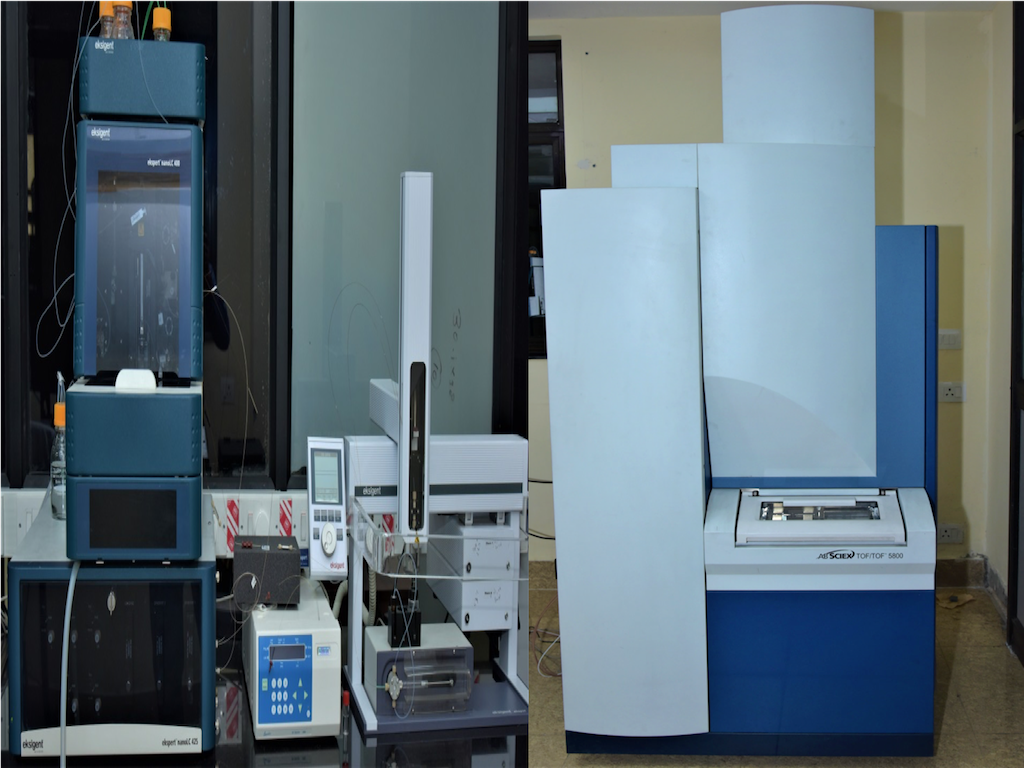
Mass Spectrometry enables determination of the molecular masses of small molecules as well as of large biomolecules such as proteins and peptides. The SCIEX Triple TOF 5600+ mass spectrometer is a high-resolution LC-MS/MS mass spectrometer with high sensitivity and high mass accuracy. The Triple TOF® 5600+ has both ESI and APPI ionization sources and is hyphenated with an ExionLC for LC-MS analysis of small molecules and also with an Eksigent ekspertnanoLC 425 for qualitative and quantitative proteomics analysis.

2. MALDI TOF/ TOF Mass Spectrometer: SCIEX TOF/TOFTM 5800
The facility also houses SCIEX TOF/TOFTM 5800 mass spectrometer with EKSpot MALDI spotter for qualitative and quantitative proteomics analysis. The system is widely used for identification of protein/peptide, characterization of PTM, de novo sequencing and relative quantification using iTRAQ, SILAC, TMT etc.

3. ESI-Mass Spectrometer: SCIEX QTRAP® LCMS/MS 6500+
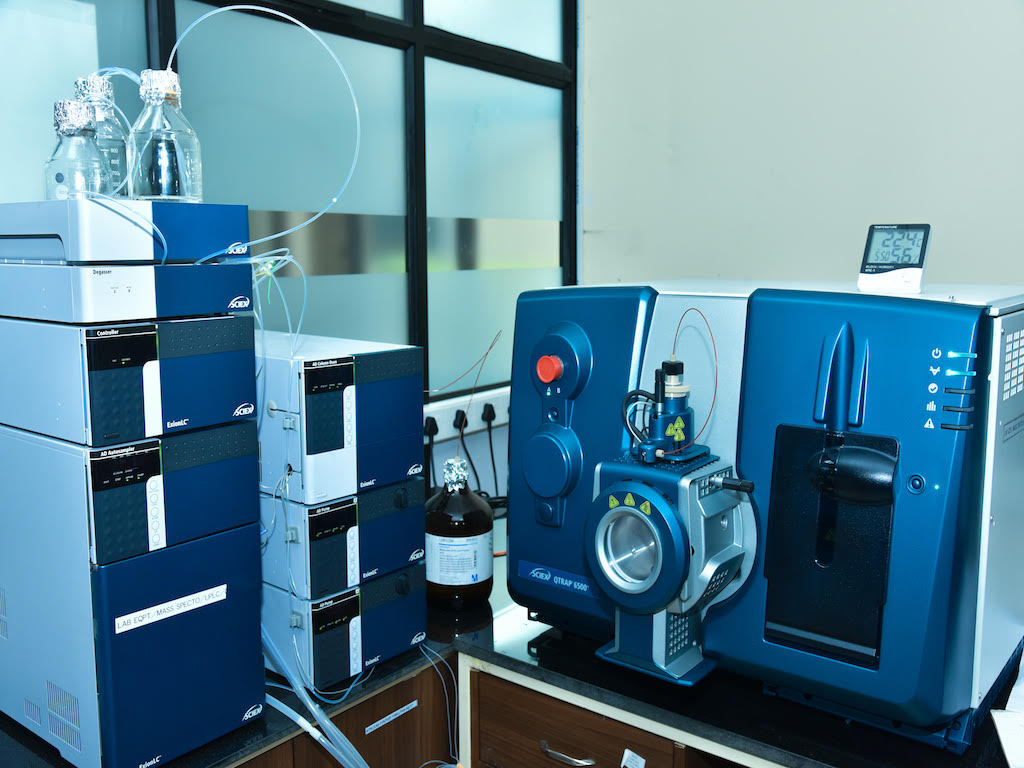
The facility is equipped with SCIEX QTRAP® LCMS/MS 6500+ system. It is the fastest and most sensitive QTRAP. It provides the best LOD's and LOQs to enable the detection and quantification of the widest scope of chemical compounds in the most challenging matrices. Improved polarity switching and MRM3 speeds allow faster chromatography and better throughput. The built in QTRAP functionality enables quantitative MRMs and qualitative QTRAP scans in the same injection to maximize throughput. Best being utilized for performing applications requiring ultimate sensitivity for ultra-low-level identification and quantitation of both small and large molecules and for confirmatory analysis of metabolites.

4. Perkin Elmer FlexarTM HPLC system
The facility provides services for cation exchange/high pH fractionation of complex proteomics samples using Perkin Elmer FlexarTM HPLC system which is coupled with automated fraction collector for wide coverage of proteome.

Optical Microscopy
This facility hosts following state-of-the-art instruments: Super Resolution Microscope; Laser Scanning Confocal Microscope and High Content Imaging System.
1. Super Resolution Microscope: Elyra PS1, Carl Zeiss
Structured illumination microscope is a widefield technique in which a grid pattern is generated through interference of diffraction orders and superimposed on the specimen while capturing images. The grid pattern is shifted or rotated in steps between the capture of each image set. Following processing with a specialized algorithm, high-frequency information can be extracted from the raw data to produce a reconstructed image having a lateral resolution approximately twice that of diffraction-limited instruments and an axial resolution upto 120 nanometers.
About Microscope: The Microscope is framed in an inverted fluorescence research microscope (Axio observer 7) with motorized stage. There are other super resolution modules available with the system which are as follows:
- Total Internal Reflection Fluorescence Microscopy (TIRF)
- Photo Activation Localization Microscopy (PALM with 3D)
- Stochastic Optical Reconstruction Imaging (STORM)
It has a metal halide illuminator HXP120 for sample observation and 4 diode lasers to make imaging comprehensive. The lasers are:
- 405 nm Laser 50 mW
- 488 nm laser 100 mW
- 561 nm laser 100 mW
- 640 nm laser 150 mW
It is equipped with varied range of microscope objectives:
- 20X Plan-Apochromat (NA0.80)
- 63X C- Apochromat Water immersion (NA 1.2)
- 63X Plan-Apochromat Oil immersion (NA 1.40)
- 100X alpha Plan-Apochromat Oil immersion (TIRF Objective) (NA 1.46)
The system uses two different cameras for imaging:
- Andor EM CCD camera iXon DU897 (For TIRF, PALM and STORM imaging)
- Camera pco.edge sCMOS Version 4.2 (for SIM imaging)
Applications: System is used to find super resolved images (resolution up to 120 nm) of cells and their network filaments/fibers, organelles.

2 Laser Scanning Confocal Microscope: LSM 880, Carl Zeiss
The coherent light (excitation laser) passes through a pinhole aperture that is situated in a conjugate plane (confocal) with a scanning point on the specimen and a second pinhole aperture positioned in front of the detector (a photomultiplier tube). As the laser is reflected by a dichromatic mirror and scanned across the specimen in a defined focal plane, the emission from points on the specimen (in the same focal plane) pass back through the dichromatic mirror and are focused as a confocal point at the detector pinhole aperture. Due to this aperture, the extraneous light (out of focus light) is not detected by the detector thereby resulting in sharp images.
About Microscope: The Microscope consists of an inverted fluorescence research microscope (Axio observer 7) with following objectives:
- 10X Plan Apochromat (NA 0.45)
- 40X Plan-Apochromat Oil immersion DIC (NA 1.30)
- 63X Plan-Apochromat Oil immersion DIC (NA 1.40)
Observation and imaging units: A metal halide illuminator (HXP120) and HAL100 illuminator for sample observation and 5 lasers including Multi Argon lines for confocal imaging.
- Diode laser 405 nm
- Laser Argon Multiline 458/488/514 nm
- Laser HeNe 543 nm
- Laser HeNe 594 nm
- Laser 633nm
Detection unit:
- Transmitted light detector T-PMT
- LSM 880 confocal scan head with 2MA-PMT and 1 GaAsP (for spectral detection)
- High resolution digital microscopy camera AxioCam 503 mono
Applications: Fluorescence imaging of tissues, cells, live imaging and spectral imaging and dynamics experiments such as FRAP and FRET.

3. Micro Confocal High Content Imaging System: ImageXpress, Molecular Devices
The ImageXpress system is an integrated cellular imaging and analysis system that is designed for rapid, automated screening of fluorescently labelled fixed and live cells in microplates. It also provides environmental control for live cell imaging, moves fluids to and from cells for compound addition. The ImageXpress Confocal system is a high-content imaging system that can switch between widefield imaging and confocal imaging. The rapid autofocus and precision sample movement features of the microscope allow large numbers of high-resolution images to be acquired in the shortest possible time. All key optical and mechanical elements are motorized, with asynchronous command execution, allowing complete real-time control of the instrument configuration through the MetaXpress high-content image acquisition and analysis software. When used in combination with the powerful image analysis capabilities of the MetaXpress software, the instrument becomes an extremely flexible and programmable device, ideally suited for user-defined, high-speed automated assays.
Instrument Specifications
- ImageXpress Micro Confocal System is a fully automated confocal microscope with pinhole sizes of 50 µm and 60 µm.
- It is capable of taking images from a microplate (96 well/ 384 well / 1536 well) or from a microscopic slide.
- It is capable of detecting and imaging multiple fluorescent signals simultaneously.
- Transmitted light imaging can be done for non-fluorescent cells.
- Z-stack images can be acquired and analysed.
- Environmental control- multi-day, live cell time-lapse imaging under appropriate temperature, humidity and atmospheric conditions can be performed.
- This system also contains single-channel, fluidics robot. This robot picks up tips from a tip box and draws fluid from and delivers fluid to a given well on the compound and sample plates. The robot is capable of dispensing volumes between 3 μL and 200 μL.
- This system also has a hotel shelf with capacity for 88 standard microplates, where plates can be stacked for imaging. With the help of Sample Handling Robotic Arm, the plates can be removed from hotel shelf and can be loaded onto ImageXpress Micro Confocal System where images are acquired, and then returned to a home location.
- This entire system has been integrated with Cytomat 2C automated incubator through a Sample Handling Robotic Arm so that multiple plates can be scanned for time-lapse live cell imaging. This automated incubator has a capacity for 42 standard microplates.
- Automated barcode reader is also a part of this system.
Light Source
The external light source for the ImageXpress Micro Confocal System is a solid-state light source that has a rated lifetime of more than 20,000 hours. It has light source for excitation of DAPI, FITC, TEXAS RED, Cy3, Cy5 wavelengths.
Objectives
- 4X Plan Apo λ NA 0.20
- 10X Plan Apo NA 0.45
- 20X S Plan Fluor ELWD NA 0.45
- 40X S Plan Fluor ELWD NA 0.60
- 60X S Plan Fluor ELWD NA 0.70
- 100X CFI L Plan EPI NA 0.85
Applications
Application modules are the foundation of the MetaXpress Software analysis workflow. These modules provide automated image analysis for biology-specific applications, interactive image segmentation, and data results, and options for data recording and management. Currently, Our MetaXpress software has the following modules:
- Angiogenesis Tube Formation
- Cell Cycle
- Cell Health
- Cell Proliferation
- Cell Scoring
- Live Dead
- Micronuclei
- Multi Wavelength Scoring
- Translocation
- Neurite Outgrowth

Protein Purification and Molecular Interactions
This facility provides the platform for purification of proteins or biomolecules using FPLC systems. ÄKTATM pure M and ÄKTATMprime are available in the facility which will aid users in purification of proteins at preparative and analytical grades. This facility also provides the platform for measuring the biomolecular interactions using Biolayer interferometry and MicroScale Thermophoresis.
1. Bioreactor: New Brunswick BioFlo 415 SIP (7L & 14 L)
The BioFlo 415 is a versatile sterilization-in-place bioreactor that provides a fully equipped system in one compact package. It can be employed for batch or continuous culture with process control of pH, dissolved oxygen (DO), agitation, temperature, pump feed, anti-foam, level and addition analog/digital inputs and outputs.

2. Bio-Layer Interferometry (BLI): Octet RED96
Bio-Layer Interferometry (BLI) is a label-free technology for measuring biomolecular interactions. It is an optical analytical technique that analyzes the interference pattern of white light reflected from two surfaces: a layer of immobilized protein on the biosensor tip and an internal reference layer. Any change in the number of molecules bound to the biosensor tip causes a shift in the interference pattern that can be measured in real-time. The binding between a ligand immobilized on the biosensor tip surface and an analyte in solution produces an increase in optical thickness at the biosensor tip, which results in a wavelength shift, Δλ. Unbound molecules, changes in the refractive index of the surrounding medium or changes in flow rate do not affect the interference pattern. This is a unique characteristic of BLI and extends its capability to perform in crude samples used in applications for protein:protein binding, quantitation, affinity and kinetics.
Assays can now be performed over a wider temperature range of 15-40°C on the Octet RED96 system, allowing for kinetics measurements of unstable proteins at lower temperatures or biologically relevant molecules at physiological temperatures. An evaporation cover for microplates also allows for greater walk-away run time, with minimal sample evaporation for up to 12 hours. The new Octet Data Analysis HT software version released with the Octet RED96 system brings custom reporting options and multi-experiment analysis that reduces analysis time from hours to minutes.

3. FPLC: ÄKTATM pure M
ÄKTA pure M is a flexible and intuitive chromatography system for fast purification of proteins, peptides and nucleic acids from microgram levels to tens of grams of target product. ÄKTA pure M is a reliable system where hardware and UNICORNTM software are designed to work together with columns and chromatography resins to meet purification challenges.
Depending on the column used with ÄKTA pure M, it can be used for the protein purification on the basis of charge (ion-exchange chromatography using columns: HiTrap Q, HiTrap SP etc.), affinity tags (affinity chromatography using columns: HisTrap, GSTrap, MBPTrap etc.) or size (size-exclusion chromatography using columns: HiLoad 16/600 Superdex 200 pg, etc.).

4. Multi Angle Light Scattering (MALS): Viscotek SEC-MALS 20
The Viscotek SEC-MALS 20 is a multi angle light scattering detector that can be used to measure the absolute molecular weight of molecules. It simultaneously measures the intensity of scattering at each angle which, in conjunction with a concentration detector, enables the calculation of the absolute molecular weight of proteins, synthetic & natural polymers and also molecular size expressed as the radius of gyration, Rg. For proteins, SEC-MALS measures the absolute molecular weight independent of column retention volume in order to study oligomeric state and aggregation.
5. FPLC: ÄKTATMprime
ÄKTAprime is the simple version of ÄKTA pure M. It is used to detect or purify biomolecules such as proteins in a mixture by recording the absorbance at 260 or 280 nm. The purified components of the mixture are collected in separate test tubes using a fraction collector. Ion-exchange chromatography, affinity chromatography, desalting, buffer exchange can be performed using this system.
6. MicroScale Thermophoresis (MST): Monolith NT.115
Monolith NT.115 uses MicroScale Thermophoresis (MST) technology to quantify binding events. One partner is typically labeled with a fluorescent dye and becomes an extremely sensitive reporter for all binding interactions. Monolith is all about accurately determining binding affinity in minutes. The strength of the interactions between a fluorescently labeled or intrinsically fluorescent sample and a binding partner (or ligand) are measured while a temperature gradient is applied over time. These events, weak or strong, cause a change in MST signal that is easily detected by plotting the normalized fluorescence against concentration of ligand. The results are automatically translated into precise and quantitative Kd values. Interactions can be studied in immobilization-free format.

7. Other services
The facility also provides services for the following instruments.
- Sorvall Lynx 6000 centrifuge, ThermoScientific
- FilterMax F5 Multi-Mode-Microplate-Reader, Molecular Devices
- Sonics vibra cell sonicator
- GEA Niro Soavi Panda Plus
| No. | Details of Services | Basis of Charges | Academic (Government) | Academic (Private) | iBRIC+ | Industry | ||||
|---|---|---|---|---|---|---|---|---|---|---|
| 1 | Electron Microscopy | |||||||||
| 1.1 | Cryo-TEM Imaging (200 kV) | Per Day | 6000 | 9000 | 3000 | 18000 | ||||
| 1.2 | Cryo-TEM Sample Preparation | Per Sample | 5000 | 7500 | 2500 | 15000 | ||||
| 1.3 | Cryo-TEM: Ultramicrotome Sectioning | Per Sample | 4500 | 7000 | 2000 | 12000 | ||||
| 1.4 | SEM Imaging | Per Hour | 3000 | 4500 | 1500 | 9000 | ||||
| 1.5 | SEM: Carbon Tape | Per Tape | 100 | 100 | 100 | 100 | ||||
| 1.6 | SEM: Critical Point Drying (CPD) | Per Run | 600 | 900 | 300 | 1800 | ||||
| 1.7 | SEM: Data Processing | Per Hour | 600 | 900 | 300 | 1800 | ||||
| 1.8 | SEM: Energy Dispersive X-Ray Analysis (EDX) | Per Sample | 2500 | 3500 | 2000 | 6000 | ||||
| 1.9 | SEM: Sample Preparation | Per Sample | 1000 | 1500 | 500 | 3000 | ||||
| 1.10 | SEM: Sputter Coating | Per Run | 1000 | 1500 | 500 | 3000 | ||||
| 1.11 | TEM Imaging | Per Hour | 2000 | 3000 | 1000 | 6000 | ||||
| 1.12 | TEM: Carbon Coater | Per Run | 800 | 1100 | 500 | 2000 | ||||
| 1.13 | TEM: Glow Discharge/HD Treatment | Per Run | 300 | 500 | 200 | 1000 | ||||
| 1.14 | TEM: Ion Cleaner | Per Sample | 400 | 600 | 200 | 1200 | ||||
| 1.15 | TEM: Sample Preparation for Ultramicrotomy (Resin Block) | Per Sample | 4000 | 6000 | 2000 | 12000 | ||||
| 1.16 | TEM: Ultramicrotome sectioning (RT) | Per Sample | 4000 | 6000 | 2000 | 12000 | ||||
| 2 | Flow Cytometry | |||||||||
| 2.1 | Analyzer | Per Hour | 3000 | 4500 | 1500 | 9000 | ||||
| 2.2 | Sorter | Per Hour | 5000 | 7500 | 2500 | 15000 | ||||
| 3 | Genomics | |||||||||
| 3.1 | DNA Sequencing | Per Reaction | 700 | 1050 | 400 | 2100 | ||||
| 3.2 | Droplet Digital PCR (ddPCR) | Per Reaction | 1000 | 1500 | 500 | 3000 | ||||
| 3.3 | Genomic DNA Extraction | Per Sample | 500 | 500 | 500 | 500 | ||||
| 3.4 | Human Cell Line Authentication | Per Sample | 5000 | 7500 | 3500 | 15000 | ||||
| 3.5 | Mycoplasma Testing | Per Sample | 500 | 600 | 500 | 1200 | ||||
| 4 | Mass Spectrometry | |||||||||
| 4.1 | Fractionation on Strong Cation Exchange | Per Sample | 8000 | 12000 | 4000 | 24000 | ||||
| 4.2 | HPLC | Per Injection | 600 | 900 | 500 | 1800 | ||||
| 4.3 | In Solution Trypsin Digestion | Per Sample | 4000 | 6000 | 2000 | 12000 | ||||
| 4.4 | In-gel Trypsin Digestion | Per Sample | 4000 | 6000 | 2000 | 12000 | ||||
| 4.5 | iTRAQ 4 plex sample preparation and processing | Per Sample | 160000 | 240000 | 80000 | 480000 | ||||
| 4.6 | iTRAQ 8 plex sample preparation and processing | Per Sample | 260000 | 390000 | 130000 | 780000 | ||||
| 4.7 | LC-MALDI | Per Sample | 6000 | 9000 | 3000 | 18000 | ||||
| 4.8 | LC-MS (Label free Quant.) | Per Sample | 30000 | 45000 | 15000 | 90000 | ||||
| 4.9 | LC-MS (Labelled iTRAQ/TMT etc) | Per Sample | 10000 | 15000 | 5000 | 30000 | ||||
| 4.10 | LC-MS (QTRAP) | Per Sample | 4000 | 6000 | 2000 | 12000 | ||||
| 4.11 | LC-MS Triple TOF | Per Sample | 5000 | 7500 | 2500 | 12000 | ||||
| 4.12 | MALDI | Per Sample | 2000 | 3000 | 1000 | 6000 | ||||
| 4.13 | Sample Clean up | Per Sample | 1500 | 2250 | 750 | 4500 | ||||
| 5 | Optical Microscopy | |||||||||
| 5.1 | Confocal Microscope | Per Hour | 2000 | 2500 | 1000 | 5000 | ||||
| 5.2 | High-Content Imaging | Per Hour | 2000 | 2000 | 500 | 5000 | ||||
| 5.3 | Super Resolution Microscope | Per Hour | 4000 | 5000 | 2000 | 8000 | ||||
| 6 | Protein Purification and Molecular Interactions | |||||||||
| 6.1 | Bioreactor (14 Litre) | Per Day | 16000 | 24000 | 8000 | 48000 | ||||
| 6.2 | Bioreactor (7 Litre) | Per Day | 12000 | 18000 | 6000 | 36000 | ||||
| 6.3 | BLI | Per Hour | 1000 | 1500 | 500 | 3000 | ||||
| 6.4 | FPLC: ÄKTAprime | Per Day | 2000 | 3000 | 1000 | 6000 | ||||
| 6.5 | FPLC: ÄKTApure | Per Day | 4000 | 6000 | 2000 | 12000 | ||||
| 6.6 | High Pressure Homogenizer (Panda Plus) | Per Hour | 4000 | 6000 | 2000 | 12000 | ||||
| 6.7 | MST | Per Hour | 1500 | 2250 | 750 | 4500 | ||||
| 6.8 | Multi-Angle Light Scattering System (MALS) | Per Hour | 1500 | 2250 | 750 | 4500 | ||||
| 6.9 | Multi-Mode Microplate Reader | Per Hour | 1000 | 1500 | 500 | 3000 | ||||
| 6.10 | Shaker Incubator | Per Day | 1000 | 1500 | 500 | 3000 | ||||
| 6.11 | Sonicator | Per Hour | 1000 | 1500 | 500 | 3000 | ||||
| 6.12 | Sorvall Centrifuge | Per Hour | 1200 | 1800 | 600 | 3600 | ||||
Terms & Conditions:
- All charges are subject to 18% GST.
- BSC-BioNEST-Bioincubator incubatees will be charged iBRIC+ rates.
- Please note that the charges listed here include instrument running costs. The consumables (columns, plates, capillaries, sensors, TEM-grids etc.), sample processing (negative staining for TEM), data analysis (for microscopy facilities) and additional services like time lapse experiments are chargeable. Please drop queries for any concerns at services_atpc [at] rcb [dot] res [dot] in.
- Please note that for hourly services minimum charges will be for two hours and subsequently for each hour.
- Please note that FPLC charges will be additional, as mentioned under FPLC: ÄKTA pure & FPLC: ÄKTAprime.
- Bioreactor (7 Litre) per day for 1st day, 2nd is Rs.6000 and 3rd day onwards is 3000/day for iBric+
- Bioreactor (14 Litre) per day for 1st day, 2nd day is Rs. 8000 and from 3rd day onwards is Rs. 4000/day
- Please note that for SEM Imaging 10 images per hour.